

Categories
Change Password!
Reset Password!



Obesity remains a major chronic ailment with severe health and economic effects.
In adults with class II and III obesity, metabolic bariatric surgery delivers nearly 3-fold greater weight loss at lower health care costs compared with GLP-1 RA therapy.
Obesity remains a major chronic ailment with severe health and economic effects. Metabolic bariatric surgery (MBS) is the most beneficial intervention for severe obesity, while glucagon-like peptide-1 receptor agonists (GLP-1 RAs) have surfaced as a leading pharmacologic alternative. This study aimed to evaluate differences in weight-loss outcomes and ongoing healthcare costs between MBS and GLP-1 RA therapy among obesity patients.
Researchers conducted a real-world cohort analysis using United States-based data from the Highmark Health insurance claims and Allegheny Health Network electronic medical records. Adults with class II or III obesity treated with either MBS (sleeve gastrectomy or gastric bypass) or GLP-1 RAs (dulaglutide, exenatide, liraglutide, lixisenatide, semaglutide, or tirzepatide) were included, provided they maintained enrollment for a minimum of six months before treatment and had at least 12 months of follow-up.
Propensity score weighting was applied to balance demographic factors, baseline costs, comorbidities, smoking status, and prior healthcare utilization. Outcomes were evaluated over a two-year period, comparing weight loss and monthly medical and pharmacy expenditures, with adjusted mean costs estimated using a linear mixed-effects model.
The final analysis included 30,458 patients with severe obesity, with:
After adjustment, baseline profiles between treatment groups remained comparable. Total healthcare spending over two years was higher in the GLP-1 RA group, primarily attributed to sustained pharmacy costs extending into the second year of treatment. Clinically, bariatric surgery resulted in markedly greater total weight reduction, delivering nearly three times the weight loss achieved with GLP-1 RA therapy (Table 1).
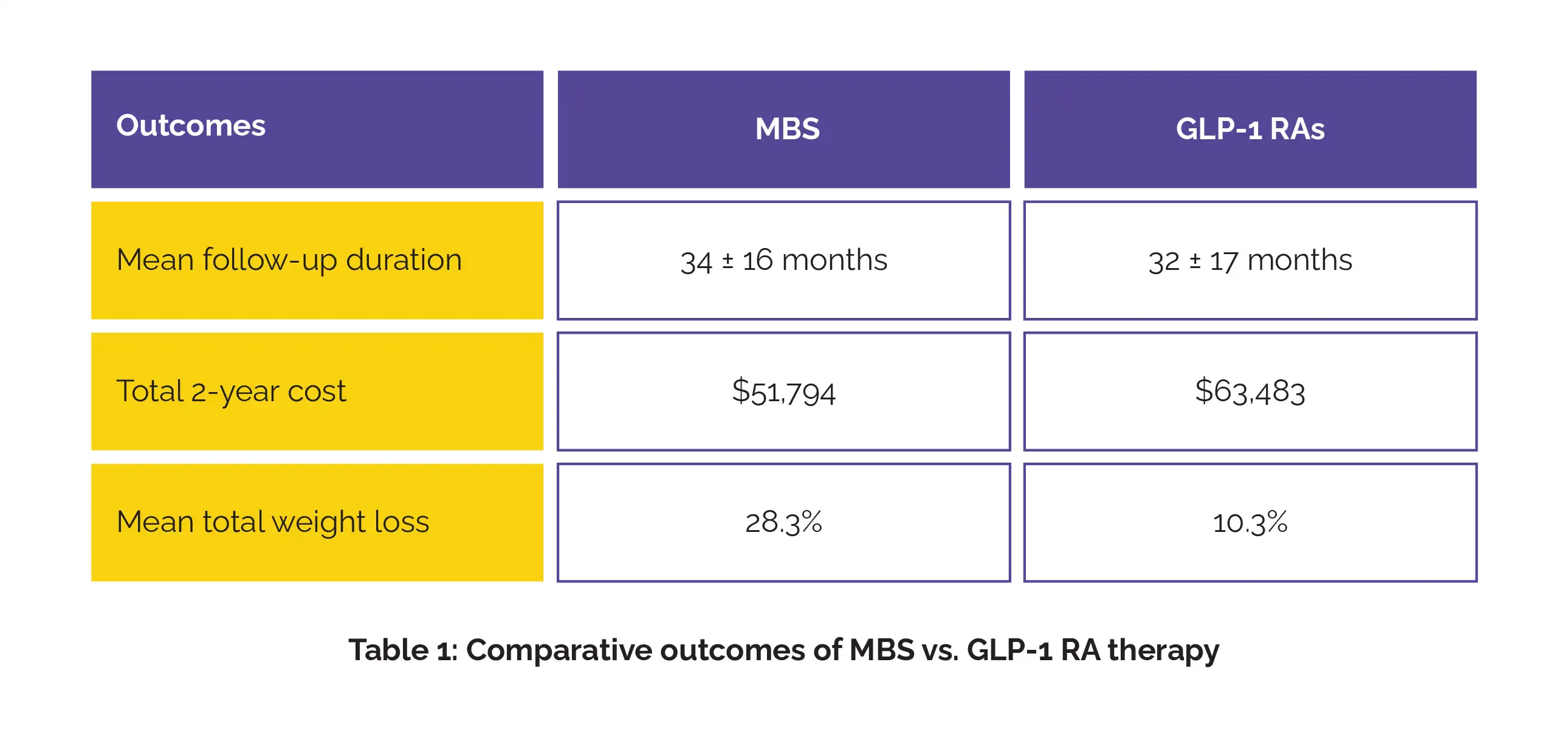
Metabolic bariatric surgery provided greater and more durable weight loss at a lower cumulative cost than GLP-1 RAs. These real-world findings challenge the traditional positioning of bariatric surgery as a last-resort treatment and highlight its potential role as a cost-effective, durable intervention for severe obesity.
JAMA Surgery
Obesity Treatment With Bariatric Surgery vs GLP-1 Receptor Agonists
Tyson S Barrett et al.















Comments (0)