

Categories
Change Password!
Reset Password!



NSAID use in adults over 60 years significantly increases gastrointestinal bleeding risk, driven by peptic ulcer history, antiplatelet use, and upper abdominal symptoms.
A large hospital-based study from Beijing has identified significant risk factors associated with nonsteroidal anti-inflammatory drug (NSAID)-induced gastrointestinal (GI) bleeding in adults aged over 60 years, highlighting major safety concerns in elderly populations commonly using these medications for pain and inflammation.
The retrospective analysis evaluated 4,728 elderly patients prescribed NSAIDs. Among them, 928 patients experienced GI bleeding, while 3,800 did not, allowing researchers to compare risk patterns using logistic regression and machine learning-based ranking methods.
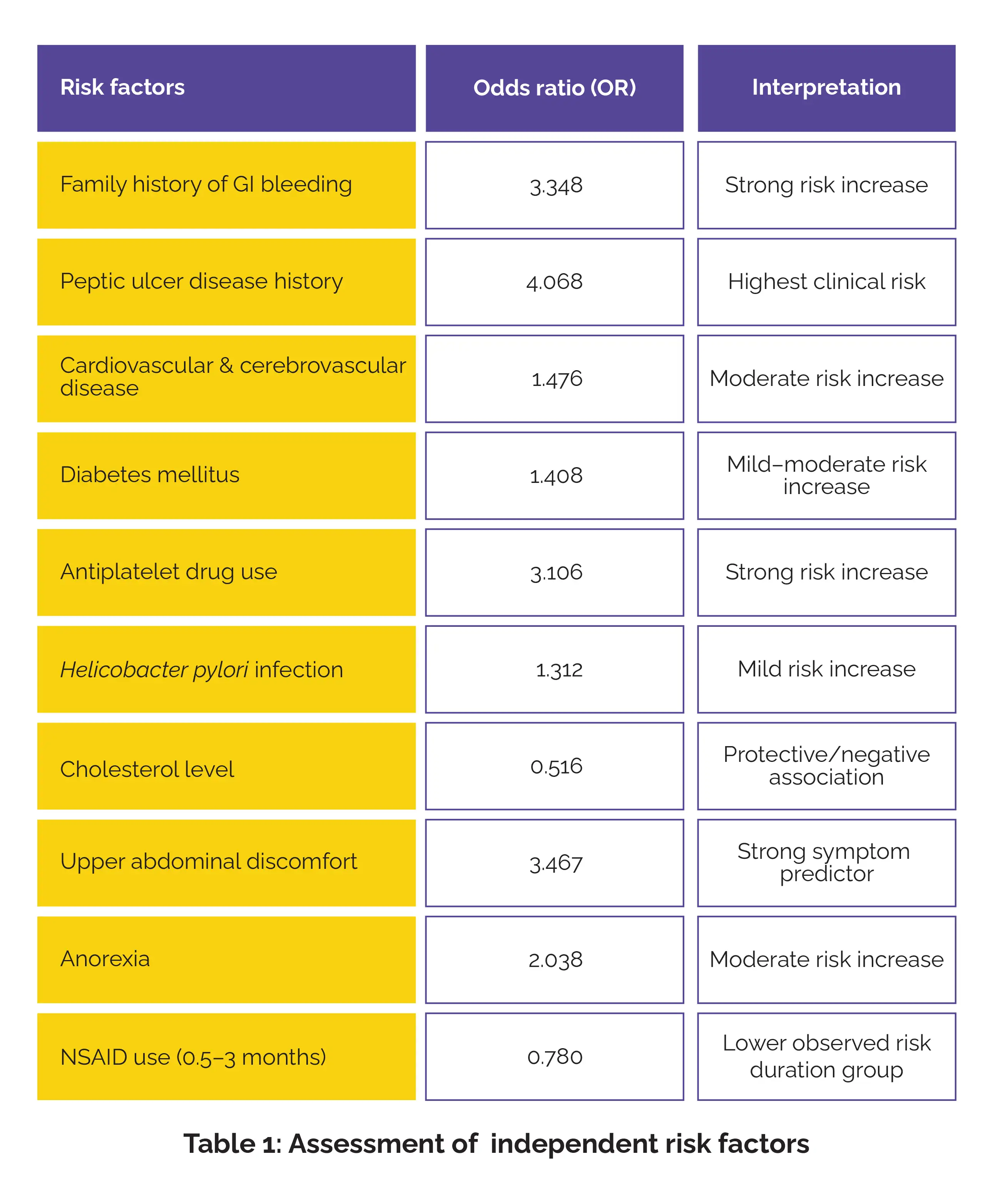
Independent Risk Factors Identified (Multivariate Analysis)
Table 1 elaborates the variables associated with increased or altered risk of NSAID-related GI bleeding.
Top Risk Factors (Machine Learning Ranking )
Using Mean Decrease Gini (random forest ranking), the top 5 most important predictors of GI bleeding were:
Researchers concluded that elderly patients on NSAIDs require vigilant monitoring, especially those with a history of GI disease or those concurrently using antiplatelet therapy. Early warning symptoms such as abdominal discomfort may help predict impending GI bleeding and allow timely intervention. The study reinforces that NSAID-related GI bleeding is a multifactorial ailment in older adults, with several identifiable and clinically actionable risk factors. Improved risk stratification may help reduce preventable complications in this high-risk population.
Medicine (Baltimore)
Risk factors associated with nonsteroidal anti-inflammatory drugs (NSAIDs)-induced gastrointestinal bleeding resulting on people over 60 years old in Beijing
Tian-Yu Chi et al.












Comments (0)