

Categories
Change Password!
Reset Password!



Peripartum acute stress disorder symptoms, dissociation, and reduced sense of control during labor substantially predict increased severity and persistence of postpartum dyspareunia.
A longitudinal observational cohort study has identified key peripartum predictors of postpartum dyspareunia (painful intercourse), emphasizing the impact of obstetric outcomes and peripartum emotional reactions on postpartum sexual pain.
The study, led by Anna Padoa et al., recruited 440 postpartum women at a single maternity ward within 2 days of delivery (T1). At 3 months postpartum (T2), 240 women (54%) who had resumed sexual activity completed follow-up assessments, including questionnaires on dyspareunia, breastfeeding, depression, and clinical obstetrical data. At T2, the postpartum dyspareunia outcomes were as follows (Table 1):
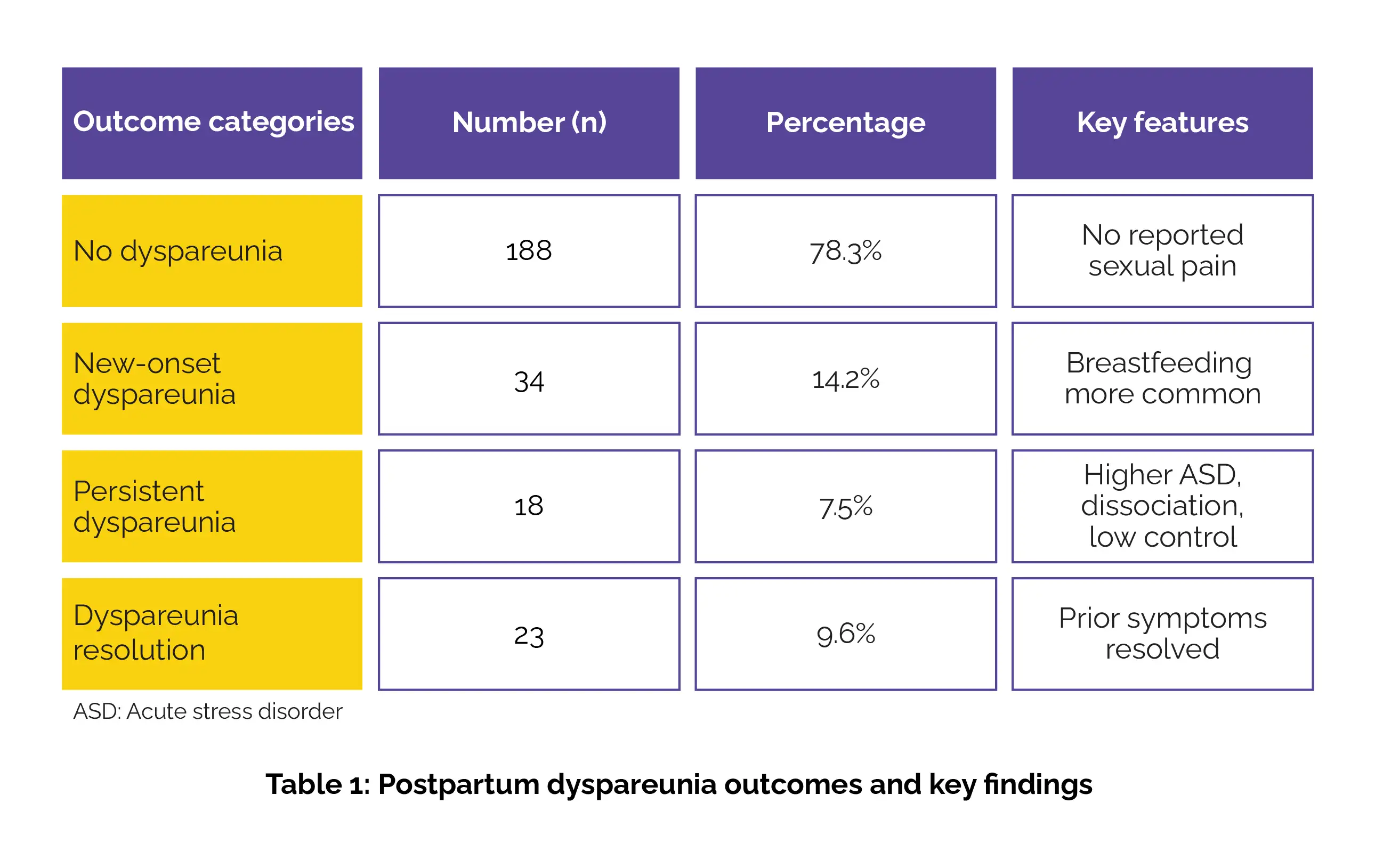
A substantial finding was that birth-triggered ASD symptoms at T1 predicted dyspareunia severity at T2 (B = 0.59, standard error = 0.28). Those with persistent dyspareunia reported higher peripartum dissociation, greater ASD symptoms, increased labor pain-related distress, and a lower sense of control during childbirth.
Notably, breastfeeding was more common among women with new-onset dyspareunia (59.4%) as opposed to those with persistent symptoms (22.2%), suggesting potential hormonal or behavioral influences on postpartum sexual pain. The findings underscore a clear connection between negative peripartum emotional experiences and postpartum dyspareunia. Researchers emphasize the need to:
Such interventions may help alleviate the burden of postpartum dyspareunia and improve overall maternal well-being during recovery.
Archives of Women's Mental Health
Peripartum predictors of postpartum dyspareunia: a longitudinal observational cohort study
Anna Padoa et al.













Comments (0)